
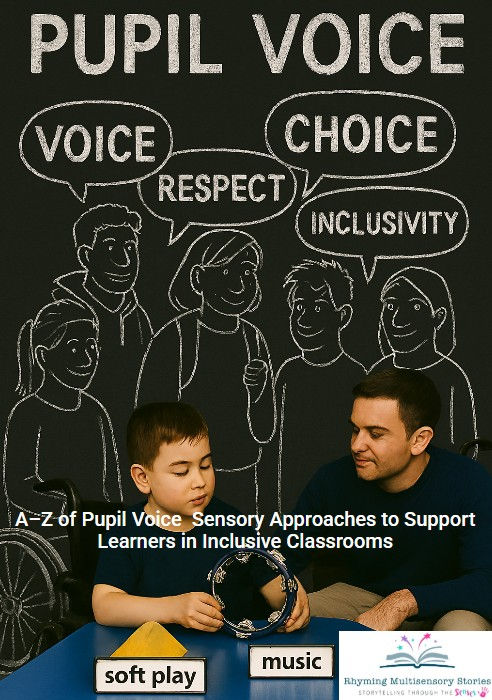

Pupil Voice An A to Z of Sensory Approaches for PMLD and SEND Learners
Pupil voice refers to the meaningful involvement of learners in expressing preferences, making choices, influencing decisions, and shaping their educational experience. For some learners with PMLD and SEND, pupil voice includes:
Eye gaze
Facial expressions
Body movements
Vocalisations
Gestures
Sensory preferences
Behaviour as communication
Patterns of engagement or withdrawal
Pupil voice is not dependent on speech or symbolic communication. It is about recognising all forms of expression and ensuring that learners have opportunities to influence:
Activities
Routines
Environments
Interactions
Resources
Sensory experiences
Transitions
Daily choices
This resource provides practical, accessible ways to embed pupil voice into everyday practice.
Every learner communicates. Every learner expresses preferences, makes choices, and shows us what matters to them. For some learners, communication may not be spoken, symbolic, or conventional — but it is always present, meaningful, and must be recognised.
Pupil voice is not about asking questions and waiting for words. It is about noticing, interpreting, responding, and shaping environments where every learner can influence their world. This resource was created to support practitioners, teachers, support staff, therapists, and families in honouring the voices of learners who communicate through movement, expression, sensory engagement, and behaviour.
This resource supports practitioners to meet their statutory duties while honouring each learner’s autonomy, agency, and emotional safety. The guidance aligns with best practice across specialist settings, offering practical ways to embed pupil voice within everyday routines, sensory experiences, and personalised communication systems.
This A–Z collection offers simple, sensory‑aware activities that help practitioners notice, interpret, and respond to the many ways learners with PMLD and SEND communicate. Each activity focuses on a different cue, action, or sensory behaviour, giving clear guidance on what to look for, how to support it, and how to build it into everyday practice. The aim is to make pupil voice visible, valued, and woven gently into routines, interactions, and learning moments across the day.
